


Summary
You spent three hours perfecting your email campaign. Great offer, clean design, clear call-to-action. You hit send to 15,000 subscribers.
Two hours later: 6% open rate. Your first thought? Maybe the subject line was bad, your second? Did people unsubscribe?
The real answer? 40% of your emails are sitting in spam folders where subscribers never see them.
Understanding why emails go to spam and how to fix it is the difference between email driving revenue and wasting your email marketing budget.
Why do my emails go to spam?
Emails going to spam isn’t about bad luck or mysterious algorithms. It happens for specific, fixable reasons.
ISPs like Gmail, Outlook, and Yahoo use spam filters to protect users from unwanted mail. These filters evaluate hundreds of signals to decide: inbox or spam folder?
When your emails trigger spam filters, you lose more than opens. A B2B company with 25,000 subscribers and 35% spam placement loses approximately $2.4M annually in pipeline from invisible emails.
The cost compounds. Each email in spam damages your sender reputation, triggering even more aggressive filtering next time. Within weeks, your email deliverability can collapse entirely.

Common reasons for email spam: the top 5 issues
Remember when you could just hit “send” and emails landed in inboxes? Those days ended in 2024.
Gmail, Outlook, and Yahoo implemented strict sender requirements.
Companies that ignored the changes saw deliverability drop 30-45% overnight. Not because their content got worse, because their technical setup didn’t meet new standards and email marketing best practices.
Email clients now use sophisticated filters that evaluate sender reputation, authentication protocols, and user engagement patterns. One misstep triggers a cascade effect that damages your ability to reach subscribers across all devices.
The 4 factors that control email campaign performance
1. Missing authentication protocols
The #1 reason emails go to spam: missing or broken authentication protocols (SPF, DKIM, DMARC).
Think of authentication like showing ID at airport security. Without proper credentials, ISPs can’t verify who sent your email. It could be you or a spammer impersonating your sending domain.
The numbers you can get:
- Proper authentication: 95%+ inbox placement
- Missing authentication: 60-70% inbox placement
- Broken authentication: 30-40% inbox placement
Gmail, Outlook, and Yahoo made authentication mandatory in 2024. Companies that ignored this saw email deliverability drop 30-45% overnight.
Quick fix: Run your domain through an authentication checker. Most companies find their SPF record is outdated or DKIM is misconfigured, errors that take 15 minutes to fix.
2. Poor sender reputation
ISPs assign reputation scores based on your sending history. High bounce rates, spam complaints, and low engagement rates all damage this score.
Poor sender reputation comes from:
- Sending to invalid email addresses (bounce rate >2%)
- Recipients marking your emails as spam messages
- Low open rates signaling unwanted content
- Hitting spam traps (abandoned addresses reactivated by ISPs)
Real example: An e-commerce company had 38% invalid addresses. Every campaign damaged their domain reputation further. After cleaning their list, inbox placement jumped from 62% to 91% in five weeks.
Your reputation affects everything. Once ISPs flag you as spam, recovery takes 60/90 days of consistent good practices.
3. Low engagement rates
ISPs, especially Google, watch how recipients treat your emails:
- Do they open them?
- Do they click links or reply?
- Do they delete without reading?
- Do they marked as spam?
Low engagement rates signal “recipients don’t want this.” High engagement signals “this is valuable content.”
The brutal cycle: Poor deliverability → emails in spam → low engagement → worse reputation → more spam placement.
How to fix: Stop sending to everyone. Focus on subscribers who’ve opened emails in the last 30-60 days. Yes, you’ll reach fewer people initially. But you’ll actually reach them in the inbox.
4. List quality and complaint rates
Sending to purchased lists, scraped addresses, or people who forgot they subscribed triggers spam issues fast.
Warning signs:
- Bounce rate above 2%
- Spam complaints above 0.1%
- Large percentage of recipients never open
- Sudden list size increases
The spam trap problem: ISPs recycle abandoned email addresses as honeypots. Hit enough spam traps and your reputation collapses instantly.
Solution: Implement aggressive list hygiene. Remove hard bounces immediately. Suppress 90-day non-openers. Use double opt-in for new subscribers. A smaller, engaged list generates more revenue than a large, dirty list.
5. Spammy content and design
While not the primary cause, certain email content and design choices trigger spam filters when your reputation is already weak:
Content triggers:
- Misleading subject lines that don’t match email content
- ALL CAPS or excessive punctuation!!!
- Spammy keywords like “FREE CASH” or “URGENT ACT NOW”
- No unsubscribe link or physical address
- Too many images with little text
The truth: Companies with strong authentication and good sender reputation can use these elements without issues. But if your technical foundation is broken, spammy content pushes you over the edge.
Fix authentication and list quality first. Worry about content second.
How to fix emails from going to spam?
Step 1: Fix authentication (30 minutes)
Run an SPF/DKIM/DMARC test on your sending domain. Fix any errors immediately. This alone typically improves inbox placement 10-15% within days.
Common authentication issues:
- SPF records including old email service providers
- DKIM signatures pointing to wrong domains
- DMARC set to “none” instead of “quarantine”
Step 2: Clean your list (1-2 weeks)
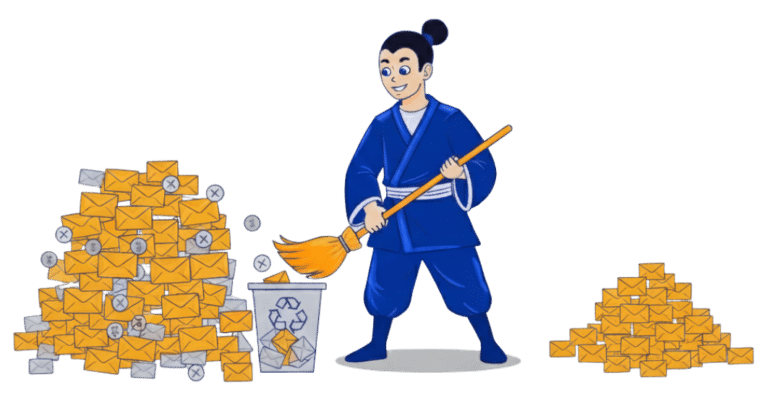
Remove hard bounces immediately. Suppress anyone with zero opens in 90 days. Implement double opt-in for new subscribers.
Yes, your list shrinks 30-40%. Your engagement rates and revenue per email double.
Step 3: Monitor key metrics
Track the metrics that predict spam issues:
- Inbox placement rate by ISP
- Bounce rates (<1% is healthy)
- Complaint rates (<0.1% is good)
- Engagement by segment
Your email service provider reports “delivered,” but that includes spam folder delivery. You need actual inbox placement data.
Step 4: Improve email design and content
Once your technical foundation is solid:
- Use clear, honest subject lines (avoid misleading subject lines)
- Include unsubscribe link and physical address in every email
- Balance images with text
- Avoid excessive spammy keywords
- Test send times and frequency
These optimizations work when your email deliverability foundation is strong.
Step 5: Get expert help for complex issues
- Some spam problems require specialized expertise. If you’re dealing with:
- Blacklist removal across multiple ISPs
- Damaged sender reputation from past campaigns
- Complex multi-domain or multi-IP setups
- Persistent spam placement despite following best practices
MailSoar’s experts have recovered deliverability for over 500 companies worldwide. We specialize in diagnosing why emails go to spam and implementing fixes that actually work.
Contact us to improve your inbox placement. Our team has helped companies recover millions in lost pipeline and marketing teams fix authentication issues.
How to avoid spam issues in the long term?
Prevention is cheaper than recovery:
- Monthly list hygiene: Remove bounces and non-openers consistently. Don’t wait for problems to appear.
- Maintain proper authentication: When changing email service providers or domains, update DNS records immediately.
- Watch your spam score: Use tools that predict which elements might trigger spam filters before sending.
- Monitor domain reputation: Track your sender reputation across major mailbox providers (Gmail, Outlook, Yahoo).
- Keep engagement high: Only send to people who want your emails. Segment by engagement level and adjust frequency accordingly.
- Warm up big changes: New domains, ESP migrations, or major volume increases need gradual scaling over 2-4 weeks.
Consistent good practices prevent the poor sender reputation that causes spam complaints and filtering.
Fixing spam issues is only the first step. To understand how deliverability connects to open rates, clicks, and ROI, we recommend reading our full guide to email campaign performance.
Want to know exactly why YOUR emails go to spam? MailSoar’s free diagnostic tool tests authentication, checks inbox placement across ISPs, and identifies your specific spam issues in 60 seconds.
What are the most common reasons emails go to spam?
The top common reasons are: missing authentication protocols (SPF, DKIM, DMARC), poor sender reputation from high bounce rates or spam complaints, low engagement rates signaling unwanted content, dirty email lists with invalid addresses, and spammy content that triggers filters. Authentication issues cause 60% of spam problems—fix this first.
How do I improve my email deliverability quickly?
Start with authentication: verify your SPF, DKIM, and DMARC records are properly configured. Then clean your list by removing hard bounces and subscribers who haven’t opened in 90 days. These two actions typically improve inbox placement 15-25% within 7-10 days. Long-term email deliverability requires consistent list hygiene and monitoring your domain reputation across mailbox providers.

