The biggest Black Friday deliverability risk is not your content, it is your volume curve. Jumping from 100 to 340 overnight tells spam filters that the sender has lost control. The fix is a checklist: ramp up in steps of 20 to 30% per day, starting with your most engaged contacts.
This article walks through that checklist as Pierre Pignault, CEO of MailSoar, presented it in our webinar with Designmodo: a three-step checklist, a calendar, numeric thresholds and a plan B. Treat the numbers as benchmarks to adapt to your sending frequency and buying cycle, not a recipe to copy as is. The full replay is available online.
In short
- Black Friday multiplies your sending volume by 2 to 5: that spike, more than your content, is what pushes emails into spam.
- Ramp up by 20 to 30% per day, never more than 50%.
- Write first to contacts engaged in the last 90 days, and exclude those inactive for over 365 days.
- Thresholds to hold: spam under 0.1% (limit 0.3%), bounces under 0.5%, unique opens 35% or more per provider.
- If something slips: go back to more engaged cohorts and spread your sends, never resend to non-openers.
The webinar on video
Pierre Pignault (CEO of MailSoar) and Lawrence Heslin (Director of Solutions) walk through this checklist: watch the webinar “Black Friday Email Deliverability: Best Practices to Reach the Inbox” on YouTube.
Why a volume spike hurts Black Friday email deliverability
Most of our clients plan to send 2 to 5 times more email during Black Friday, in both volume and frequency. Spam filters dislike a sudden, unexpected surge from a single domain. Three risks add up:
- The volume spike. An unexpected surge looks like a compromised account, or a sender who no longer controls their sending.
- Wider segments. To send more, you write to contacts who have not opened anything for a long time. Opens drop, perceived relevance drops, and emails slide into spam.
- A stricter ecosystem. More email is sent during Black Friday than at any other time of year, so filtering gets tougher. You have no control over that, which is why you need to control the other two risks.
The first two are fixed by the same method: a gradual ramp-up based on engagement.
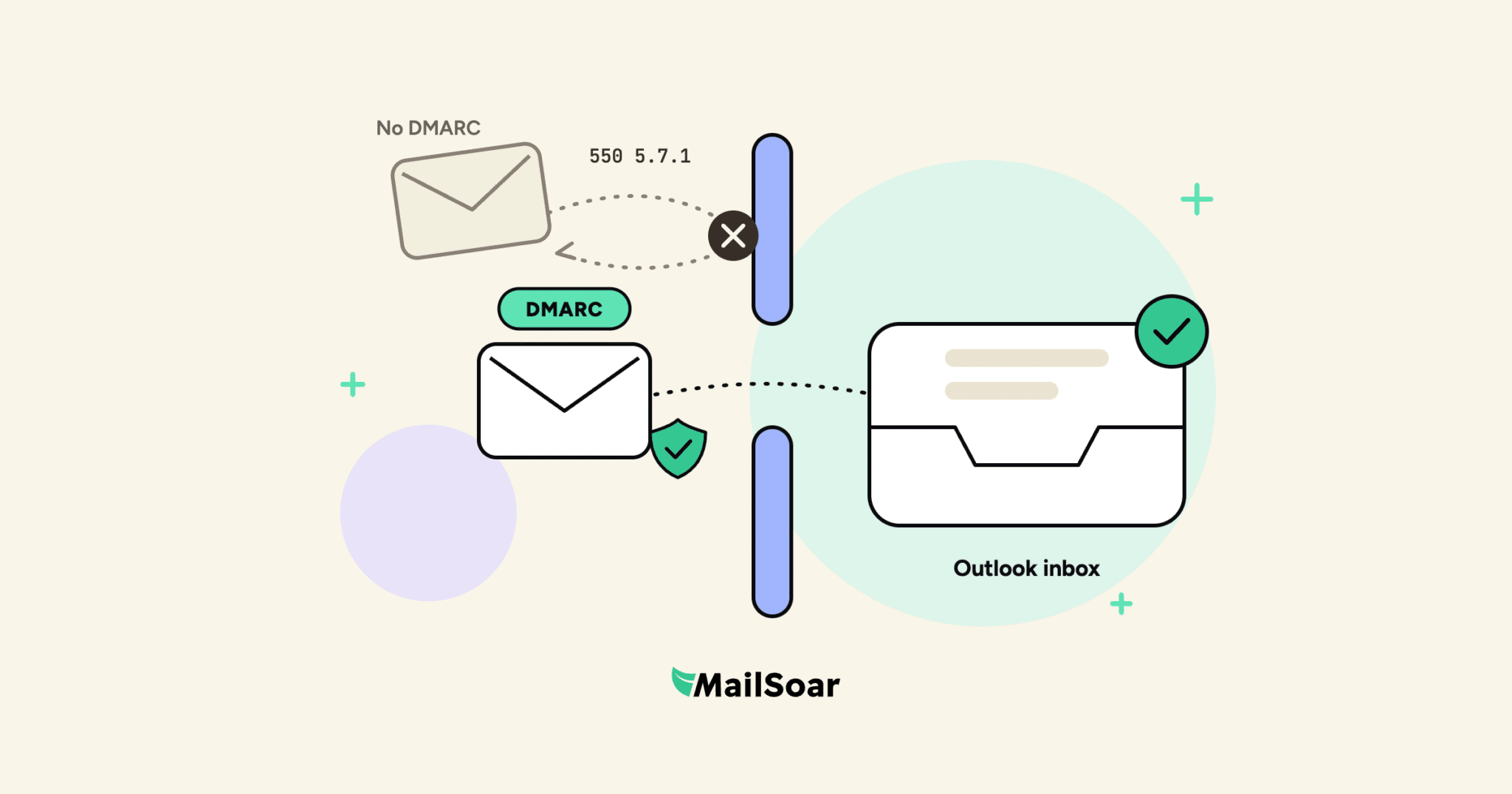
Step 1: meet Gmail, Yahoo and Microsoft sender requirements (SPF, DKIM, DMARC)
Before any ramp-up, check that you meet the requirements of Gmail, Yahoo and Microsoft. For a B2C sender, Gmail usually represents 50 to 70% of the list, Yahoo 10 to 20% and Microsoft (Outlook, Hotmail, Live) 10 to 20%. The requirements below target senders sending more than 5,000 emails per day.
- Authentication. SPF and DKIM must pass, and DMARC must be at least
p=none. All three providers ask for the same thing. - Unsubscribe. Gmail and Yahoo require one-click unsubscribe, which your sending platform usually handles. Microsoft asks for an unsubscribe that is easy and works. In every case, opt-outs must be honored without delay.
- Spam rate. Aim for under 0.1% on a 7-day moving average, with a limit of 0.3%. In practice, 0.3% means 3 complaints per 1,000 emails. Above that, providers may place your emails in spam or even block them.
These rules are no longer new, but enforcement is tightening. Gmail and Yahoo have required them since February 2024, and Microsoft since May 5, 2025 for Outlook.com, Hotmail and Live. Since November 2025, Gmail has ramped up enforcement: non-compliant messages face temporary, then permanent rejections. Microsoft’s side is detailed in its official announcement.
Monitor this rate in Google Postmaster Tools and in Yahoo’s sender tool. Both are free and far more accurate than the numbers in your sending platform. And remember Pierre’s rule: better 100 unsubscribes than a single spam complaint.
Pierre compares authentication to a passport and a visa: SPF lists the sources allowed to send on your behalf, and DKIM is a cryptographic key proving the email really comes from you. A simple test before the peak: send yourself an email, open the original and check that SPF, DKIM and DMARC show “pass” on your own domain, not your platform’s. Keep the sender name and reply-to address consistent too.
BIMI (your logo and a blue check mark in the inbox) is a bonus. It requires a trademarked logo, a VMC certificate and a strict DMARC: too long to set up if you have not started, but worth considering afterwards.
Step 2: build engagement cohorts
Filters judge the relevance of your emails by what recipients do: opens and clicks on one side, complaints, unsubscribes and non-opens on the other. If you send to your whole list, opens fall, filters read that as low relevance, more emails land in spam, and opens fall again. It is a downward spiral, and Black Friday speeds it up.
The answer is to split your list by how recently each contact engaged. The windows below are indicative: adapt them to your sending frequency and buying cycle.
| Last engagement | Role during Black Friday |
|---|---|
| 0 to 90 days (and new subscribers) | Core audience: daily sends are possible |
| 90 to 180 days | Introduce from the start of the ramp-up, at a lower frequency (weekly if the core gets daily emails) |
| 180 to 365 days | Re-engagement: 5 to 10% opens at best, even with good deliverability. Send monthly, or spread the volume on top of the core audience |
| Over 365 days | Exclude from Black Friday, work on them after the peak |
Black Friday is not the time to win back older contacts: it is the time to serve your best customers safely.
Clean the cohorts you rarely email. Contacts you email every week are not the problem. Those you have not contacted for months are: run them through an email verification tool (Bouncer, mentioned during the webinar). A bounce rate above 2 or 3% makes your list look purchased.
Test before sending to the oldest contacts. Take a cohort of 100,000 people inactive for over a year. Rather than sending to everyone, send to a sample, measure (for example 3% opens versus 50% on your engaged segments), then calculate how much volume you can add without dragging down your overall open rate.
Segment by provider if your tool allows it. You can use 90 days for Gmail, 110 days for Microsoft and 80 days for Yahoo: the windows do not have to match.
Step 3: ramp up in steps of 20 to 30% per day
MailSoar’s rule fits on one line: increase volume by 20 to 30% per day, 50% at most. A 50% daily increase is already considered massive. Going from 200,000 to 800,000 emails at once is out of the question; going from 200,000 to 300,000, then 400,000, gives filters time to adjust.
Pierre Pignault illustrates the principle with a target of about 3.4 times your usual volume for Black Friday and Cyber Monday. It is only an example: most brands aim for at least three times, but you will not necessarily go that far.
| Daily increase | Days to reach 3.4 times usual volume |
|---|---|
| 20% | 7 days |
| 30% | 5 days |
| 50% (maximum) | 4 days |
These durations are a simple calculation from the rule, before any segment or calendar constraint. Above all, they show that the ramp-up window, from November 16 to 26, leaves room to spare if you start without waiting.
The gradual increase also works as a live test. If you get 40% opens at 100% of usual volume, you could drop to 10% at 340%: by climbing in steps you see it coming and can decide to stay at 270% or 210%. At each step, add contacts in order of engagement: most recent first, oldest last.
Three practical habits:
- Spread large sends over several hours instead of sending everything at once, if your platform allows it.
- Avoid round hours. Sends peak at fixed times: scheduling a campaign at 11:06 rather than 11:00 helps you avoid the spike.
- Never add more volume to make up for poor performance: see plan B below.
Checklist calendar: from November 12 to the November 27 peak
The windows overlap on purpose: technical preparation (authentication, lists, segments) ends on November 19, while the ramp-up starts as early as the 16th and runs until the 26th. The peak covers Black Friday (November 27) and Cyber Monday (November 30). Afterwards, return gradually to your usual segments and cadence, even if Christmas pushes you to keep a busy pace.
Email deliverability indicators to check every morning: spam, bounces, opens
Every morning, look at yesterday’s results, provider by provider (Gmail, Yahoo, Microsoft). These are the thresholds MailSoar uses internally:
| Indicator | Threshold to meet |
|---|---|
| Spam rate | 0.1% target, 0.3% maximum (7 or 30-day average) |
| Bounce rate | Under 0.5% (very good: under 0.2 to 0.3%) |
| Unsubscribe rate | Under 0.5% |
| Unique open rate | 35% or more, for each provider |
| Daily volume change | Under 50% |
The unsubscribe rate usually follows the same trend as the spam rate: above 0.5%, the latter is probably too high as well. To know where your emails land, add inbox placement tests with a seed list (for example GlockApps, which sends to about 100 addresses and reports inbox or spam by provider). Keep an eye on rejections: any spike in 4xx or 5xx bounces during Black Friday should alert you.
Focus on Gmail, Yahoo and Microsoft. Looking only at Gmail is a mistake: Yahoo and Outlook come second and are worth monitoring too.
Plan B: what to do if your emails land in spam on Black Friday
In 99% of cases the answer is the same: go back to more engaged cohorts and spread the volume over time. Never resend to non-openers or send a bigger batch: that would be shooting yourself in the foot.
| Symptom | Response |
|---|---|
| High spam rate | Cut back to the most active cohorts, lower the frequency |
| Opens collapsing at a single provider | Tighten the segment for that provider only |
| Deferrals rising | Pause large campaigns, spread the volume over a wider period |
| Bounces above 0.5% on one segment | The list was not cleaned properly: verify and remove invalid addresses |
| Bounces above 0.5% overall | Likely a reputation problem: pause and read the bounce codes |
| Emails landing in spam | Get back to 35% opens or more through segmentation, then climb again slowly over a few days |
This is why you should prepare your fallback segments before Black Friday (for example audiences engaged in the last 30 or 60 days): the day an indicator slips, you will not have time to build them.
The checklist before the peak
- ☐ SPF, DKIM and DMARC pass on your own domain, and one-click unsubscribe works
- ☐ Google Postmaster Tools and Yahoo’s sender tool are set up, with spam under 0.1% on a 7-day average
- ☐ Rarely emailed cohorts are cleaned (invalid addresses removed)
- ☐ 90, 180 and 365-day segments are ready, plus 30 or 60-day fallback segments
- ☐ A visual sending calendar is shared with the whole team
- ☐ Volume grows by 20 to 30% per day, never more than 50%
- ☐ Large sends are spread out and not scheduled on the hour
- ☐ Indicators are tracked daily by provider, with alerts
- ☐ A plan to return to normal is ready for after the peak
- ☐ One person owns deliverability in the team
The last point is often neglected: when ownership is spread thin, everyone looks at their neighbor and nobody acts.

Black Friday email deliverability: frequently asked questions
Go further with MailSoar
Watch the webinar. Pierre Pignault and Lawrence Heslin walk through each step, with answers to attendees’ questions: watch the replay.
Get your emails checked. For Black Friday, MailSoar offers a free Deliverability Check: an inbox placement test, a personalized report and a 30-minute session with an expert.
Don’t miss our next events. Subscribe to the MailSoar newsletter to get our deliverability tips and be invited to our next webinars and events: subscribe to the newsletter.
Read next. Outlook now requires DMARC: what’s at risk without it.
Sources
- Email sender guidelines, Gmail Help (Google): spam rate thresholds and requirements from 5,000 messages per day.
- Email sender guidelines FAQ, Gmail Help (Google): stronger enforcement from November 2025.
- Outlook’s new requirements for high-volume senders (Microsoft): SPF, DKIM and DMARC required above 5,000 emails per day.
- MailSoar x Designmodo webinar (YouTube): MailSoar’s internal thresholds, calendar and numeric examples.